
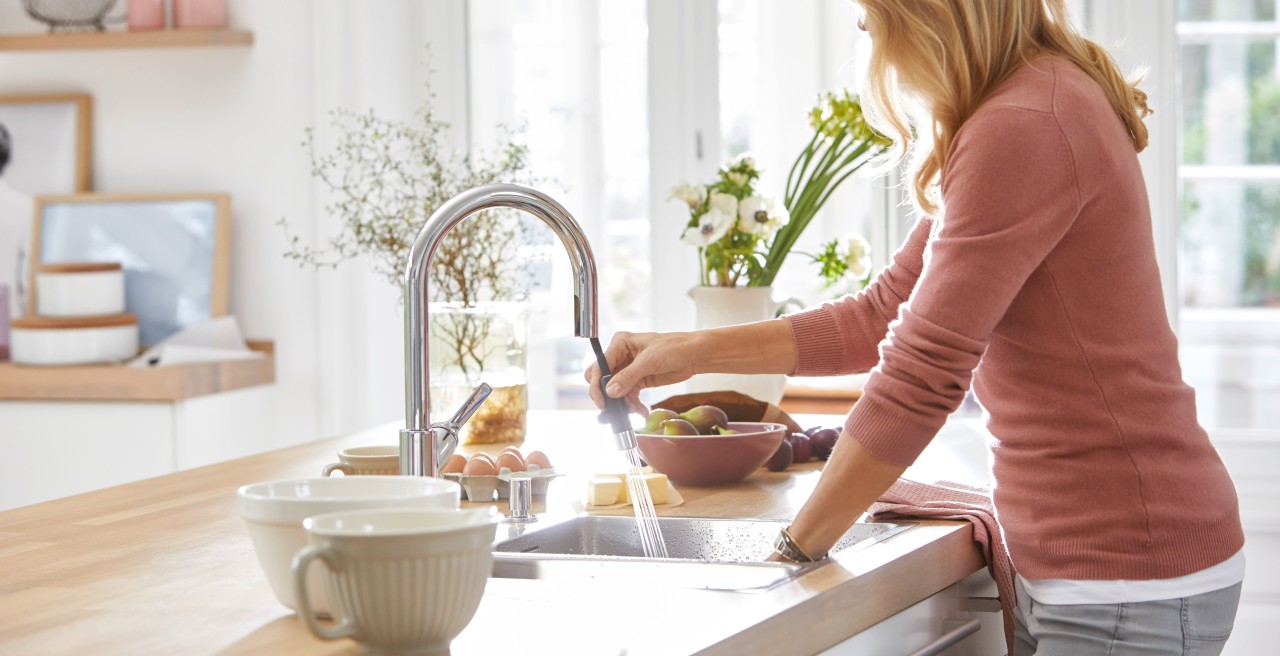
Many people see washing up as a tiresome chore. Fortunately, dishwashers are now a standard feature of almost every kitchen. They make the perfect household aid and make your day-to-day tasks that bit easier. Thanks to their low water and energy consumption, most dishwashers are actually even more economical and environmentally friendly than washing up by hand. But not everything can or should be cleaned in a dishwasher.
6 golden rules for washing up by hand
Coated frying pans, long-stemmed wineglasses and certain materials, such as wood, all belong in the sink. You will also have to scrub burned pot bottoms by hand when it comes time to wash up. We’ve put together a few tips and tricks for you here to ensure that washing up doesn’t become a disagreeable chore. How to wash up properly – and do something good for yourself and the environment at the same time!
1. Dispose of food leftovers
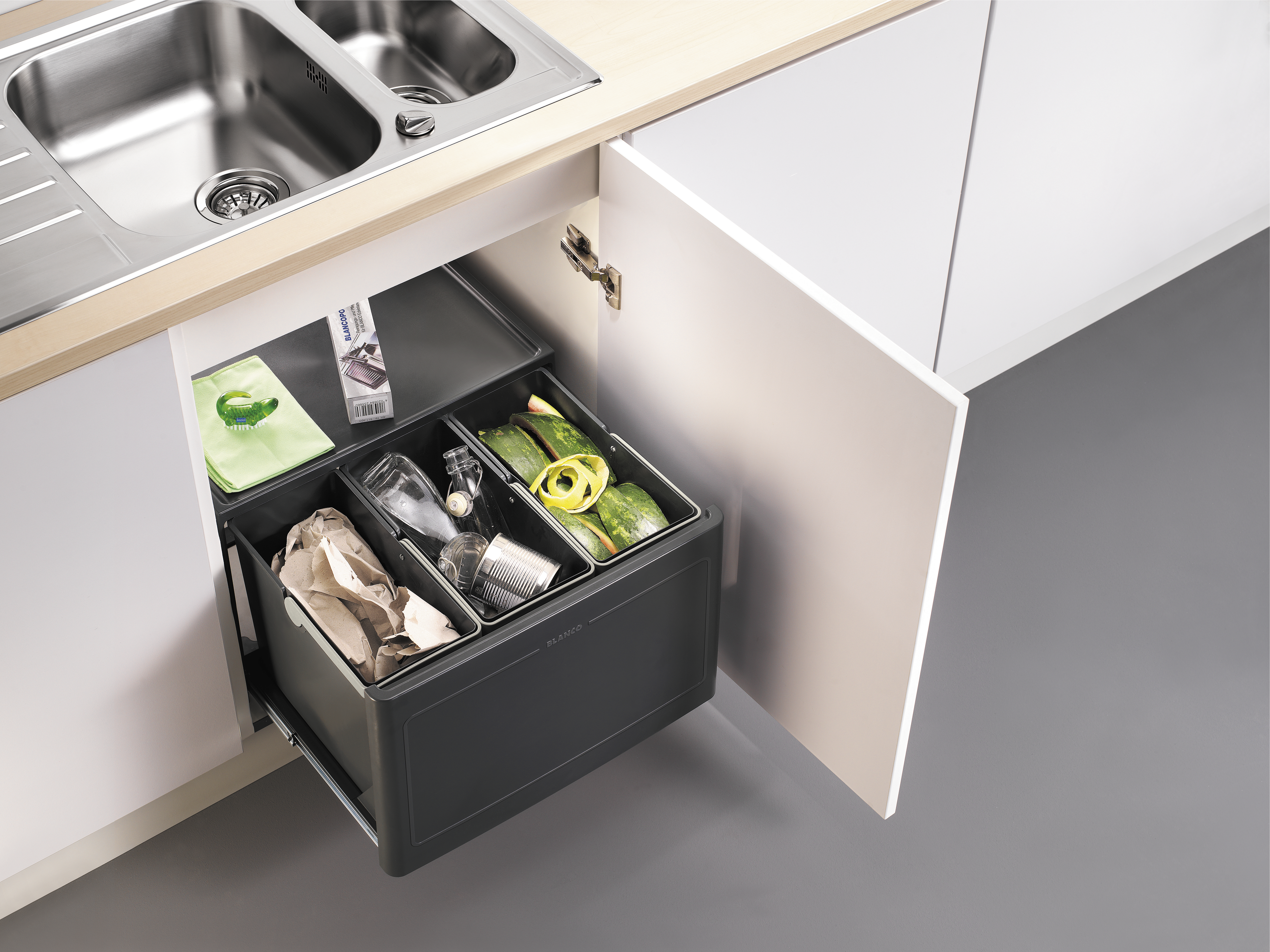
No matter whether you use the dishwasher or do the washing up by hand, you should get rid of any large bits of food waste first of all. The reason for this is that food remains can clog up the drain of both the sink and the dishwasher. Disposing of leftovers is particularly easy if you have a waste management system integrated directly beneath the sink:
a. For drawer and pull-out fronts, the BLANCO SELECT II and BLANCO FLEXON waste systems with a combined organisational drawer are especially suitable.
b. For hinged doors, there’s the BLANCO BOTTOM PRO and BLANCO SINGOLO, which you can mount to the bottom of the base cabinet and pull out on rails.
c. The BLANCO SOLON inbuilt waste collector is particularly practical for disposing of compost and organic waste, and can simply be integrated into the worktop.
2. Soak burnt-in substances
3. Sort out your washing up
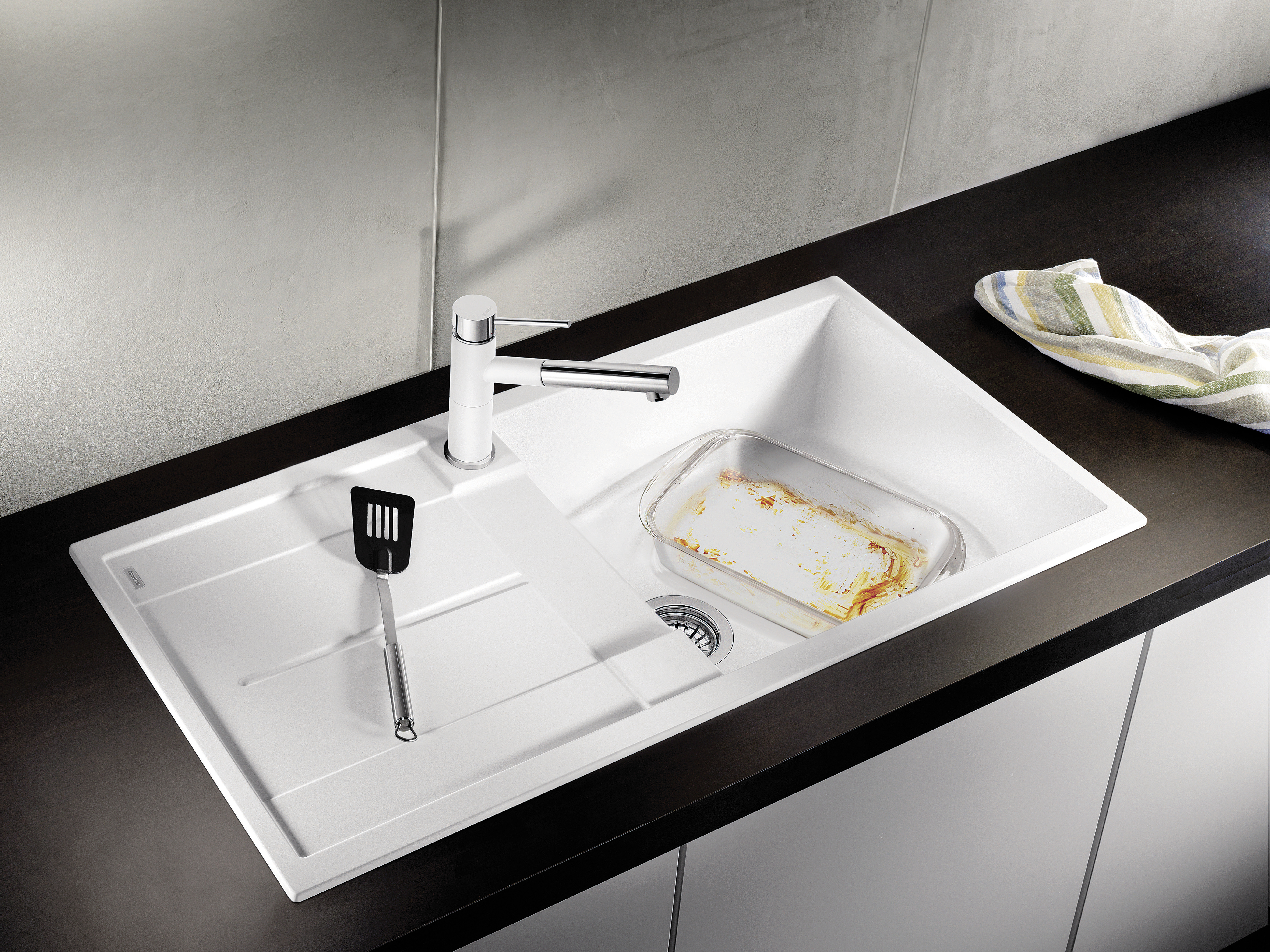
The basic principle is that the dirtier the crockery, the later you should rinse it off. In other words, glasses come first, then cups, plates and cutlery. Pots and pans come at the end, especially if they have burned-on remains. Grease-smeared dishes should also only be cleaned at the end of your washing-up session. If necessary, soak very dirty items before washing them up.
4. Do not wash dishes under running water
Leaving the water running while rinsing dishes means that you're wasting resources unnecessarily. It’s better to gather together everything that can’t go in the dishwasher and then wash it in the half-full bowl of the sink. What’s more, the hotter the water, the easier it is to remove fats. Note: just add a couple of drops of washing-up liquid once you’ve already put some water in the bowl. This helps to preserve the environment and prevents excessive foam. This froth can leave marks when your dishes dry.
The BLANCO soap dispenser helps to ration out washing-up liquid and looks much more elegant than a plastic bottle of cleaning product.
5. Let the dishes dry in the air
Tea towels also need to be washed. Cut down on the resources this requires and the time it takes to dry up by leaving the dishes to dry in the air.
It’s perfectly practical with clever sink accessories from BLANCO. Wedged in the bowl, a floating grid creates an extra functional level for drying dishes. Alternatively, you could simply place the practical crockery basket on the bottom of the bowl or extend your drainer with an adjustable drip tray.
6. Ensure hygiene at the sink
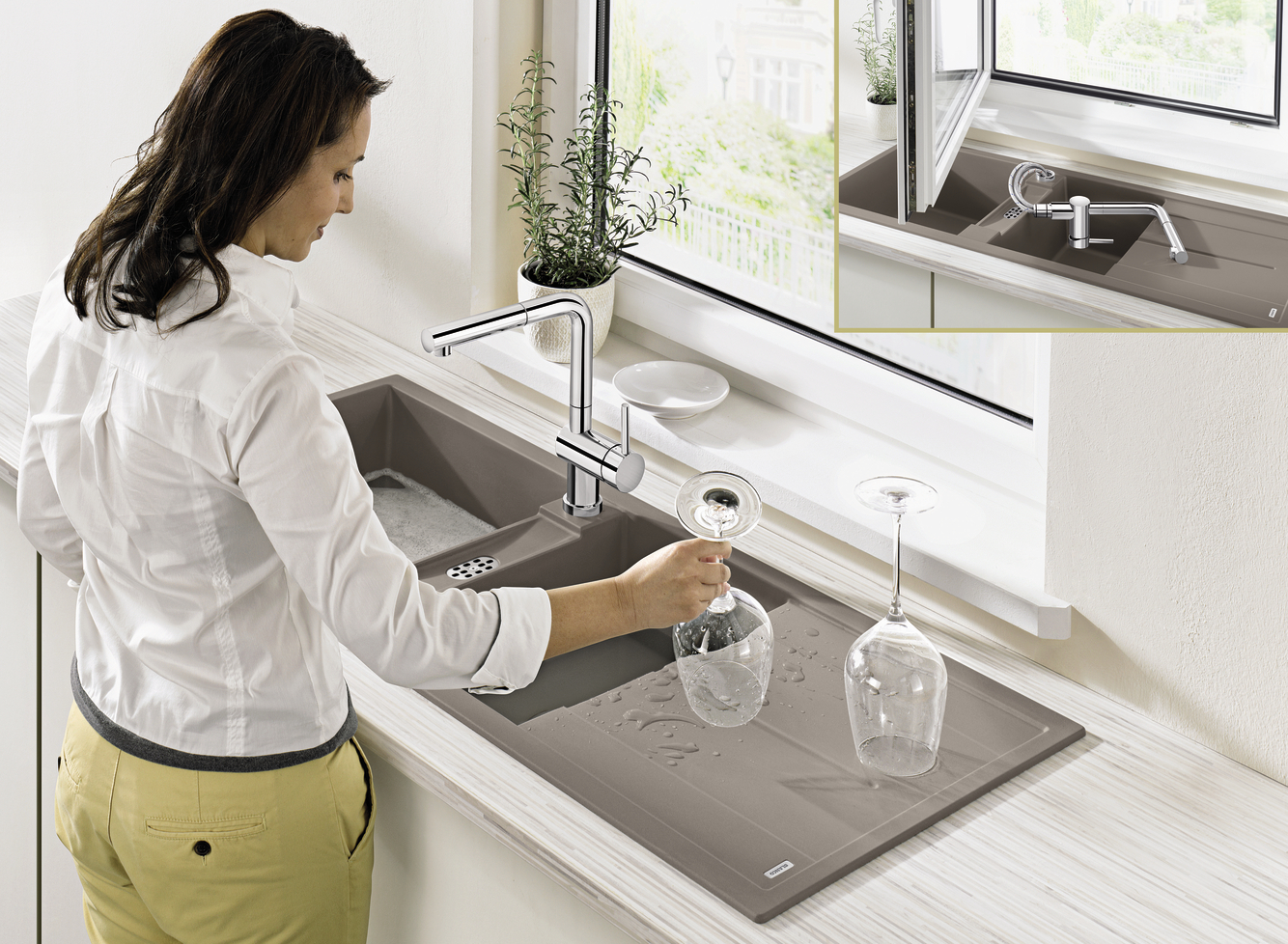
Damp sponges and cloths are a perfect breeding ground for germs, such as bacteria and mould. To avoid this, let cloths, sponges and dishcloths dry off completely after you wash up. Cleaning utensils that you use daily should be swapped out after a week, Wash tea towels regularly at a minimum of 60 degrees, so that any germs don’t stand a chance.
Cleaning tips for special items
Drain dirty water away at the touch of a button
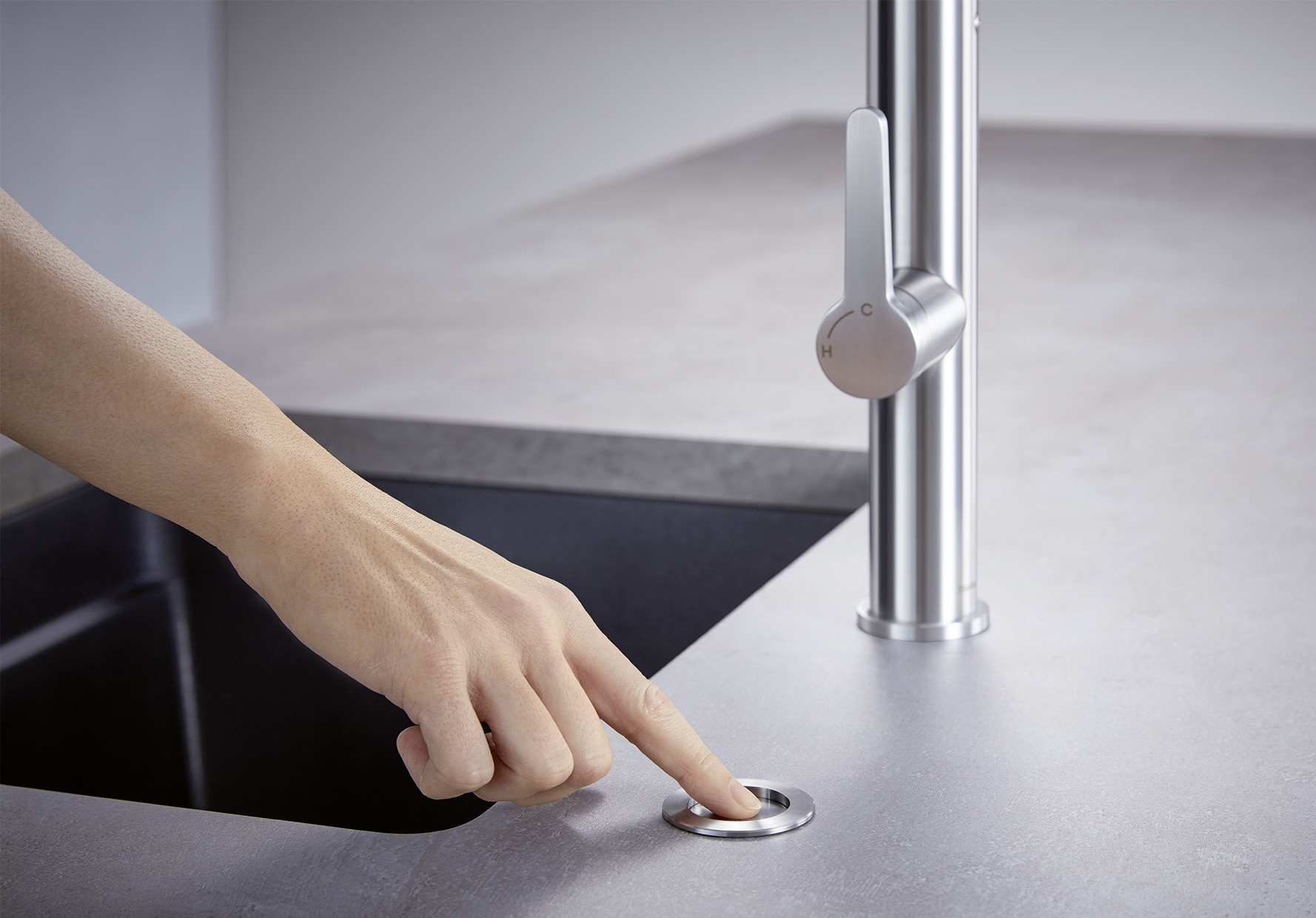
- PushControl is a mechanical yet equally elegant drain remote control made of stainless steel that can be integrated into the tap ledge or worktop so that it is almost completely flush. Open and close the drain simply by pressing a button.
- Drain remote controls from the design range have been specially developed for BLANCO mixer taps. They are positioned a little higher and protrude from the worktop like a little cylinder beside the tap. They also work with one easy touch of a button, so your hands stay dry.
This means that washing up is not a tiresome chore, but rather a pleasant part of your everyday life: discover the magic of your sink with BLANCO and conjure up sparkling glasses and clean crockery in an instant.
Even your sink needs washing down
Having a sink that beams back at you as you make your morning coffee is bound to put you in a good mood. The US tidying expert Marla Cilley, also known as ‘Flylady’, is well aware of this. As her first step towards imposing order on your home and establishing balance in your everyday life, she prescribes a 15-minute evening routine. It centres around a highly polished kitchen sink. It’s best to use a microfibre cloth for this. Another advantage of polishing your sink every evening is that no stubborn marks or streaks of limescale will remain in your sink. If you do spot such marks, the following tips will help: